Rogers homeowners need an electrical readiness plan that works in every season. Thunderstorms, wind, intense summer cooling demand, ice, and sudden outages can all test a home’s wiring, panel, appliances, and backup equipment.
For concerns that go beyond a basic household check, an electrician Rogers, AR homeowners can contact through NWA C&S Electric may be the safer next step. NWA C&S Electric serves residential and commercial properties in Rogers and surrounding Northwest Arkansas communities, and its Rogers service page covers electrical troubleshooting, repairs, lighting, panel upgrades, wiring, and installation work. That practical local experience makes professional evaluation especially valuable when weather or seasonal demand exposes an electrical problem.
Why Seasonal Electrical Planning Matters in Rogers
Electrical systems work harder when temperatures swing. Air conditioners, heat pumps, refrigerators, ceiling fans, sump pumps, portable heaters, and battery backups can place substantial demand on circuits. A weak connection or overloaded circuit may go unnoticed during mild weather, then become apparent when several high-draw appliances run at once.
Before a major weather event, check the Rogers Alert Center for local notices that may affect travel, outdoor work, or household preparations. Keeping a basic emergency plan reduces last-minute decisions when conditions deteriorate.
Common Electrical Risks During Rogers Storms
Storm damage is not always obvious. Lightning can cause a power surge that affects electronics, appliances, and connected smart-home equipment. Wind can damage service lines or pull branches onto overhead wiring. Rainwater can enter exterior boxes, meter equipment, outlets, garages, crawlspaces, or areas around appliances.
- Downed, sagging, or damaged power lines near the property.
- Water near outlets, extension cords, the electrical panel, or appliances.
- Burning smells, buzzing, smoke, or discoloration after a lightning strike.
- Flickering lights throughout the home rather than in one fixture.
- Cracked meter boxes, damaged weatherheads, or loose exterior conduit.
Treat every downed line as energized. Keep people and pets well away, avoid fences, puddles, trees, and other objects that may be in contact with it, and report the hazard to emergency services or the utility provider.
A Simple Pre-Storm Electrical Checklist
- Unplug sensitive electronics if severe weather is approaching.
- Move phones, laptops, and chargers away from windows and possible leak areas.
- Test smoke alarms and carbon monoxide alarms.
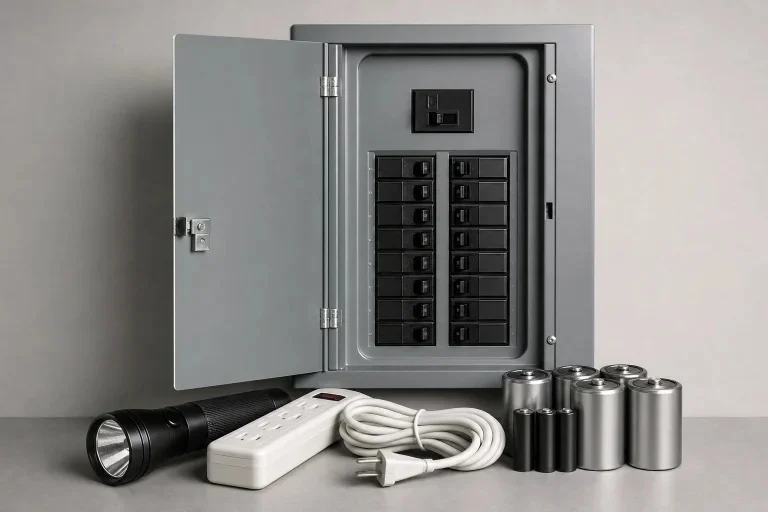
- Keep the electrical panel area clear, accessible, and dry.
- Set out flashlights, fresh batteries, and portable phone chargers.
- Review generator or battery-backup instructions before an outage occurs.
- Save the outage-reporting number for the electric provider.
How to Protect Electronics From Power Surges
A basic power strip is not automatically a surge protector. Look for a listed surge-protection device when protecting computers, televisions, network equipment, gaming systems, or home-office electronics. Whole-home surge protection may also be worth considering for homes with smart systems, sensitive appliances, medical equipment, or substantial electronic investments.
Surge protection is helpful, but it cannot guarantee protection from every lightning event. Proper grounding and bonding remain important parts of a complete approach, so it is wise to have those systems reviewed before adding new protective equipment.
Generator Safety for Rogers Homeowners
Portable generators can provide temporary power, but they also introduce serious carbon monoxide, fire, shock, and backfeeding hazards. Run a portable generator outdoors only, well away from doors, windows, vents, and attached garages. Never use one in a basement, shed, enclosed porch, or garage, even with the door open.
- Keep the generator dry and use it only on a stable outdoor surface.
- Use heavy-duty cords rated for the connected load and intended for outdoor use.
- Never connect a generator directly to household wiring without an approved transfer setup.
- Allow the unit to cool before refueling and store fuel safely.
- Have permanent standby generators and transfer equipment installed by qualified professionals.
Summer and Winter Electrical Checks
Before summer, watch for breakers that trip when air conditioning, pool equipment, refrigerators, or kitchen appliances run. Check outlets and switches for warmth, discoloration, looseness, or unusual odors. Avoid placing multiple high-draw appliances on the same circuit, and consider a panel review before adding an electric vehicle charger or major new appliance.
Winter brings different concerns. Plug space heaters directly into wall outlets, keep them at least three feet from bedding, curtains, and furniture, and never use a damaged extension cord. During freezing weather and possible outages, follow updates from the National Weather Service Tulsa forecast office so supplies, fuel, and backup equipment can be prepared before roads become hazardous.
When a Home Needs an Electrical Inspection
Do not ignore a small symptom simply because it comes and goes. Schedule an inspection if lights dim when large appliances start, breakers trip repeatedly, outlets feel warm, switches buzz or spark, or a burning smell appears. A professional assessment is also sensible after water reaches electrical components, when an older home has fuse equipment or aluminum wiring, or before a remodel and major addition.
What to Do After an Outage
- Determine whether the outage affects the entire home or only one circuit.
- Turn off or unplug sensitive electronics until power is stable.
- Look for smoke, water intrusion, damaged equipment, or arcing signs.
- Do not repeatedly reset a breaker that trips again.
- Arrange professional help when visible storm damage or unexplained electrical symptoms remain.
Frequently Asked Questions
Should a homeowner reset a tripped breaker after a storm?
One trip may result from a temporary overload. Repeated trips, sparks, odors, water exposure, or visible damage are reasons to stop resetting the breaker and have the circuit evaluated.
Can a power strip protect electronics from lightning?
A listed surge protector can reduce the risk from many everyday surges, but no plug-in device can promise complete protection from a direct lightning strike.
How often should a home’s electrical system be checked?
Schedule an inspection when warning signs appear, after a storm or water damage, during major remodeling, or when an aging panel and wiring system has not been evaluated for years.
Conclusion
Electrical readiness does not require an overwhelming project. A seasonal check, clear panel access, working alarms, safe backup-power practices, and quick action on warning signs can help Rogers homeowners prevent a minor issue from becoming a dangerous emergency.

Lexy Summer is a talented writer with a deep passion for the art of language and storytelling. With a background in editing and content creation, Lexy has honed her skills in crafting clear, engaging, and grammatically flawless writing.